PROJECT CONTEXT
LEARNING NEED
The objective of this project was to standardize knowledge related to what design principles make e-learning courses meaningful and engaging.
E-LEARNING PRINCIPLE:
SHORt content presentations
Often referred to as micro-learning or narrated slideshows, Short Content Presentations are concise, multimedia-driven modules designed to deliver a specific learning objective in a brief window of time. These presentations typically last between two and five minutes and combine visual elements with audio to leverage dual-coding theory.
BENEFITS OF SHORT CONTENT PRESENTATIONS
Improved retention
Breaking complex topics into short, digestible segments (microlearning) facilitates Active Retrieval Practice.
Easier Storage: The brain can hold and process smaller “chunks” of information in working memory more effectively.
Lower Cognitive load
Reduced Cognitive Load: Short explanations prevent “bottlenecks” in the brain, allowing for a smoother transition of knowledge into long-term memory.
Learners are familiar with instructors. Voice narrations take this role, guiding learners through explanations and reducing the need for reading long paragraphs.
example
COGNITIVE
SKILLS
E-LEARNING PRINCIPLE:
SEGMENTATION
Segmenting information is an instructional design strategy that involves breaking down complex or dense subject matter into smaller, manageable “chunks” to prevent learner fatigue and reduce cognitive overload. By dividing content into bite-sized segments, learners can fully process one concept before moving to the next, which helps build stronger associations and improves long-term memory retention.
BENEFITS OF SEGMENTATION
Info Chunking
Core Concepts: Learners can better identify “must-know” versus “nice-to-know” information to streamline the segmenting process.
Logical Sequencing: This pedagogical flow allows better retention by building from simple foundations to complex applications.
Interactive Pauses: Knowledge Checks between segments reinforce learning and ensure mastery before proceeding.
Easy to follow
Scannability: Key takeaways are visible at a glance, improving the overall user experience.
Structural Consistency: A uniform style across all segments reduces the mental effort required to navigate the course.
Intentional White Space: Balancing text with visual breaks keep sthe interface clean and the information digestible
example
SEGMENTING INFORMATION
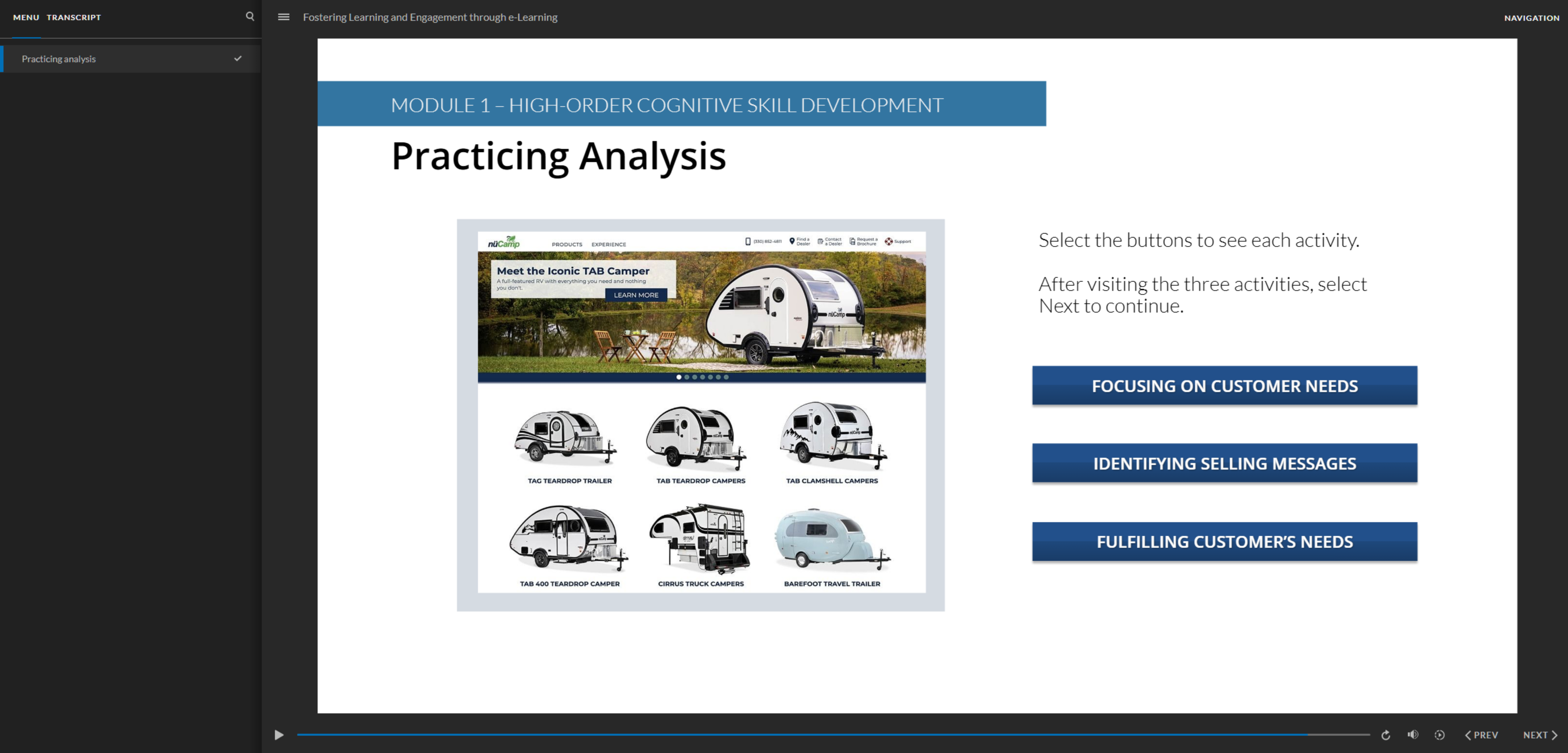

Move the slider to the left and right.
This interaction is designed to segment information in three ideas. Every button takes learners to a new slide where a new explanation is made.
Now, select Play on the video to see it in action.
 carlos-celis.com